
Silver Ivy Media E-Commerce
E-commerce websites that make buying feel clear, safe and simple.
An e-commerce website is an online store where customers can view products or services, understand what they are buying, add items to a cart, choose delivery or collection options, and complete an order or payment journey. A good online store is not just a shop page. It is a buying system that needs clear products, trust, policies, payment paths and ongoing care.
Plain-English explanation
What an e-commerce website actually is
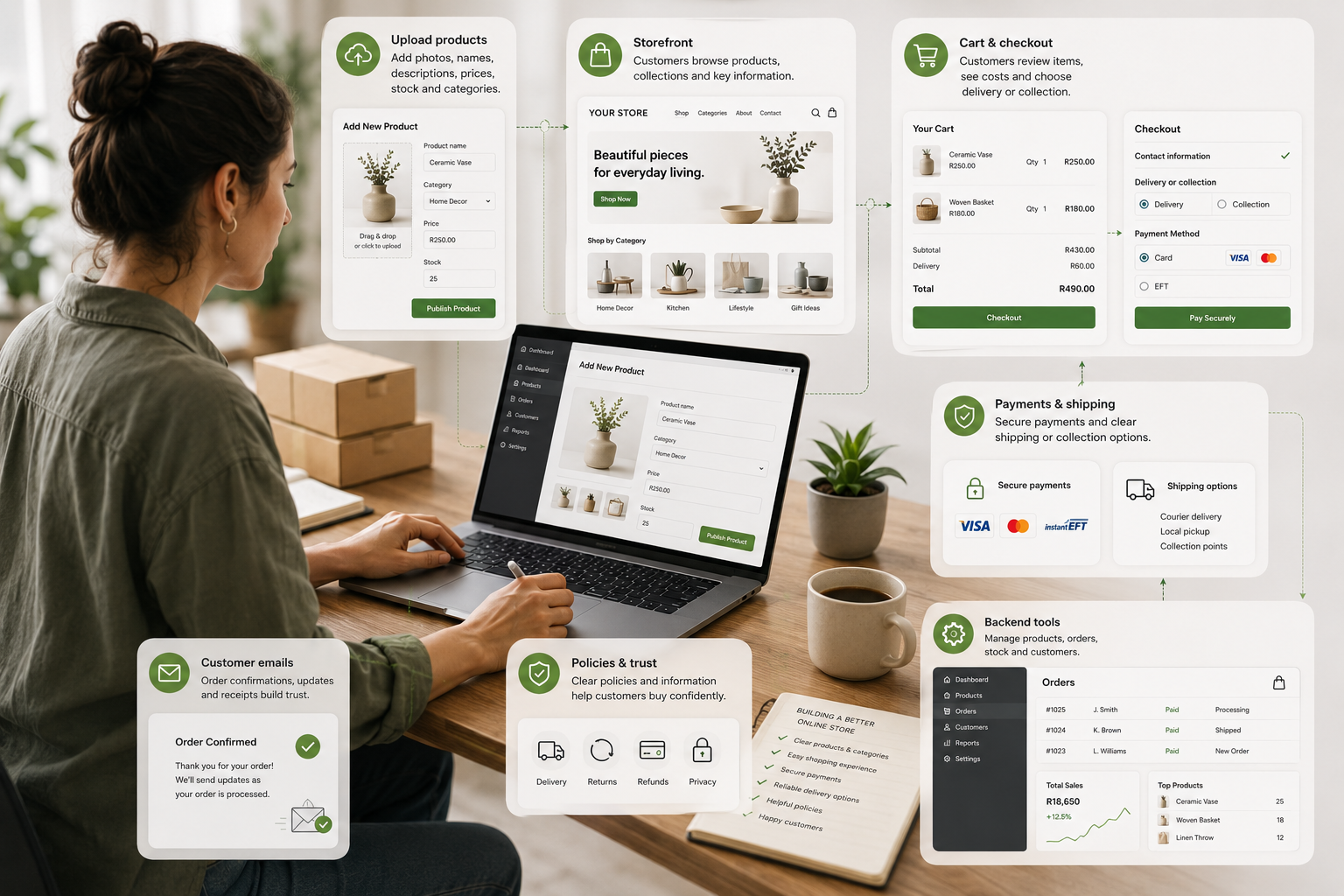
An e-commerce website is a website that supports online buying. It can include product pages, product categories, a cart, checkout, payment gateway integration, shipping or collection information, customer emails, store policies and backend tools for managing products and orders.
The important part is not just making products appear online. The store must help customers understand the offer, trust the business, know the costs and terms, and complete the next step without confusion. That is where good structure, clear wording and practical setup matter.
What a useful online store should do
A good online store does not just display products. It removes doubt before the customer gives up.
People hesitate when they cannot see prices, delivery rules, product details, payment options, refund terms or whether the business looks trustworthy. Our e-commerce approach focuses on a clear buying journey: what the customer is buying, why it matters, how they get it, what happens after payment and who they can contact if they need help.
Clear buying journey
Guide customers from product discovery to enquiry, cart or checkout with fewer dead ends and less uncertainty.
Product clarity
Show product names, descriptions, pricing, images, variations and important buying details in a way customers can understand.
Trust before checkout
Make delivery, collection, returns, refunds, contact details and store policies easier to find so customers know where they stand.
Mobile-friendly shopping
Build with mobile users in mind because many customers browse, compare and buy from their phones.
Practical payment paths
Support payment gateway setup where included, while keeping gateway approvals, fees and provider rules clear.
Clear store responsibility
Separate what Silver Ivy Media sets up from what the shop owner remains responsible for, such as products, orders and customers.
Service inclusions
What e-commerce website setup can include
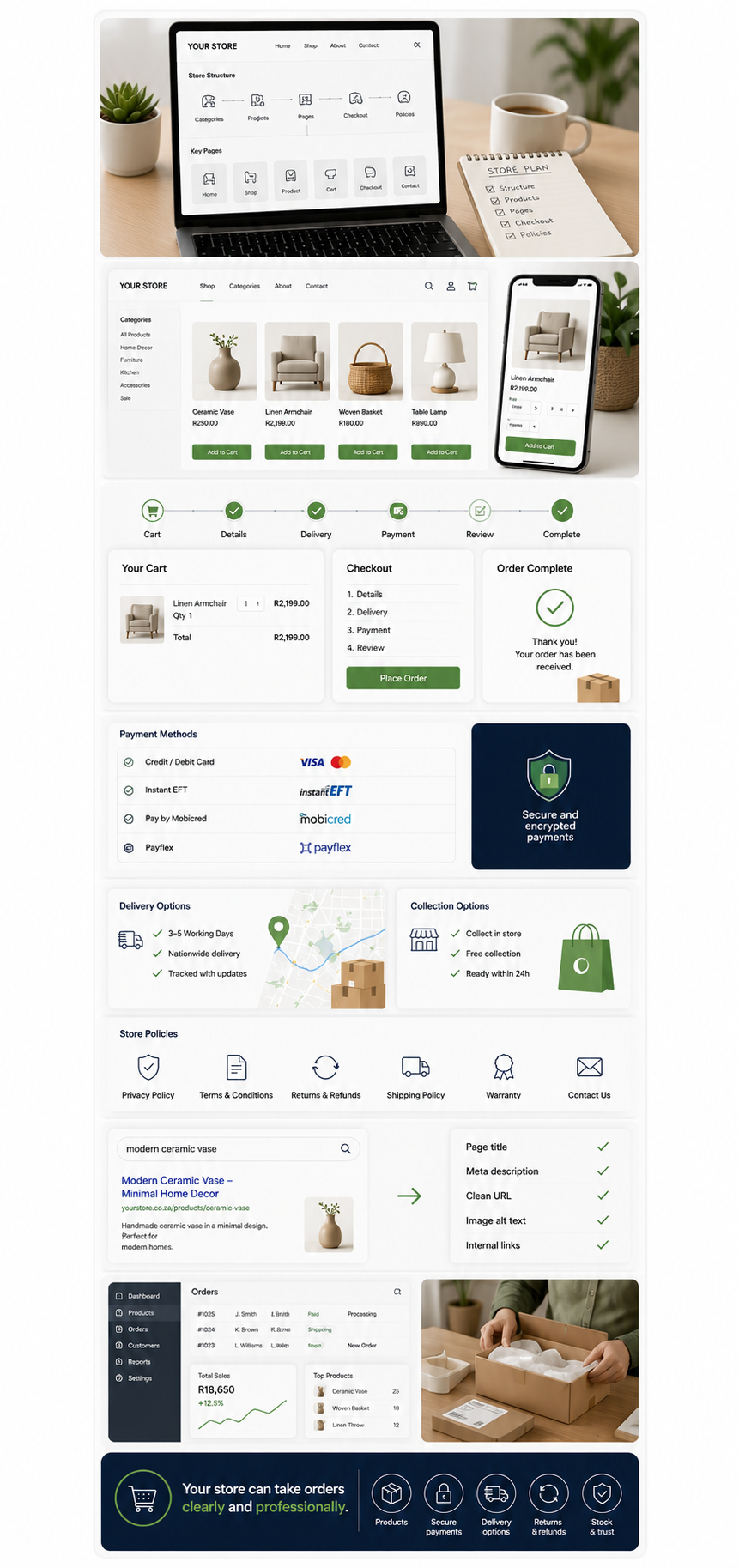
The exact e-commerce work depends on your selected package, number of products, payment needs, shipping rules and store complexity. Before work starts, we confirm what is included, what information we need from you, and what would be quoted separately.
Store planning
We help plan the store structure, product categories, key pages, checkout path and information customers need before buying.
Product pages and categories
We can create product and category layouts that make product information easier to browse and understand.
Cart and checkout flow
We can configure a practical cart and checkout journey according to the chosen platform, package and payment requirements.
Payment gateway guidance
We can assist with connecting supported payment methods where included, but gateway approval, fees and account rules remain with the provider and client.
Delivery and collection information
We help place delivery, collection, shipping, lead-time and service-area information clearly so customers are not guessing.
Policy page placement
We can help structure links to store policies such as privacy, terms, refunds, returns, warranties and customer support where relevant.
Shop SEO foundations
We can apply basic shop SEO foundations such as product/category structure, page titles, descriptions, internal links and image context where included.
Quoted store extensions
Advanced filters, subscriptions, memberships, bulk product imports, booking systems, custom integrations and complex automation may be quoted separately.
Our process
How we approach an e-commerce build
We keep the process clear and practical. An online store needs more planning than a simple brochure website because products, payments, delivery, policies and customer expectations must work together.
We understand what you sell
We look at your products, services, product types, pricing structure, delivery model and what customers need to know before ordering.
We map the store structure
We plan core pages, product categories, product fields, policy links, calls to action and the buying path.
You provide accurate store content
The client supplies product names, prices, images, descriptions, stock rules, delivery details, warranty information and policy wording where needed.
We build the agreed store setup
We create the agreed e-commerce structure, product layouts, navigation and checkout-related setup according to the package or quote.
We test and prepare for launch
Before launch, the client reviews product details, pricing, forms, checkout, policies and store settings so the site is approved before going live.
Trust and clarity
Online stores need trust, not smoke and mirrors
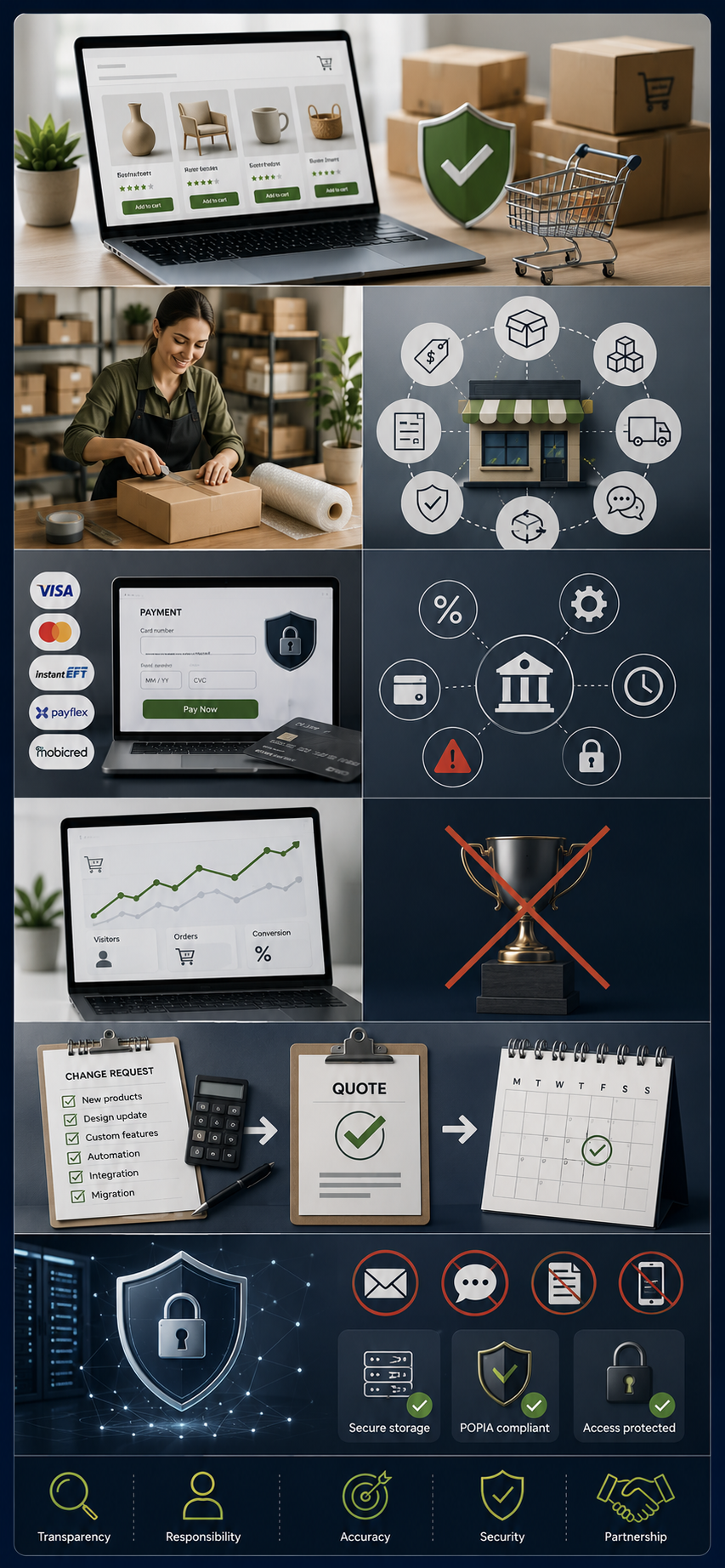
We do not treat e-commerce like a magic sales machine. A store still needs good products, honest pricing, clear fulfilment, reliable service and client responsibility. We build the website side properly and make sure expectations are clear before money changes hands.
The client remains the seller
Silver Ivy Media builds and supports the website. The shop owner remains responsible for products, pricing, stock, orders, delivery, refunds, warranties, returns and customer service.
Product and legal information must be accurate
Clients must check product descriptions, prices, claims, images, delivery rules, refund wording, warranty wording and regulated product information before launch.
Payment gateways are third-party providers
Payment gateway approvals, transaction fees, payout rules, downtime, fraud checks and account restrictions are controlled by the gateway provider, not Silver Ivy Media.
No guaranteed sales
A proper online store can support sales, but we do not guarantee purchases, revenue, rankings, traffic or conversion rates.
Large store changes are quoted first
New product ranges, major design changes, custom features, advanced automations, migrations and integrations may require a separate quote before work begins.
POPIA-aware handling
We store client/project records securely and in line with POPIA. Clients should not send passwords, OTPs or banking access details through ordinary forms, email or WhatsApp.
Policies without the legal fog
Important client-friendly notes
Our Terms, Privacy / POPIA Notice, Refund & Cancellation Policy and PAIA Manual explain the detailed rules. This page gives a plain-language overview of e-commerce website services, store responsibilities, package boundaries, third-party costs and client obligations.
Questions clients usually ask
E-commerce questions, answered plainly
What is an e-commerce website?
An e-commerce website is an online store that helps customers view products or services, understand the offer, add items to a cart, choose delivery or collection options, and complete an enquiry, order or payment journey.
Do I need a full online store or just a product catalogue?
It depends on how you want customers to buy. A catalogue may be enough if customers enquire before ordering. A full online store is better when customers should add products to a cart and complete checkout online.
Can Silver Ivy Media set up online payments?
Yes, where included or quoted, we can assist with supported payment gateway setup. The client remains responsible for the payment provider account, approval, fees, payout rules and compliance with the provider terms.
Who is responsible for ecommerce orders and refunds?
The store owner is responsible for products, stock, pricing, orders, delivery, returns, refunds, warranties and customer service. Silver Ivy Media sets up and supports the website according to the selected package or quote.
Do you add products to the store?
Product loading depends on the selected package or quote. The client must supply accurate product names, descriptions, prices, images, variations, stock rules and delivery information.
Can you write product descriptions for me?
We can help with product wording where included or quoted separately. The client must still confirm that descriptions, claims, specifications, pricing and legal information are accurate and lawful.
Can you guarantee that my online store will make sales?
No. We can build a clear, professional online store, but sales depend on product demand, pricing, traffic, marketing, trust, competition, fulfilment and customer service.
What legal pages does an online store need?
Most stores should clearly link to terms, privacy information, refund and cancellation rules, delivery or collection information, returns or warranty information where applicable, and contact or complaint details. The exact wording should be reviewed by the business or a legal professional.
Can you update an existing online store?
Yes. Existing store updates, product changes, shop improvements, new categories or feature changes can be handled according to the selected package or quoted separately.
What about customer personal information?
Online stores may collect customer information through forms, accounts, orders, payments or enquiries. The client is responsible for its own customer data and privacy disclosures, while Silver Ivy Media handles client/project records and technical support information in a POPIA-aware way.
Next step
Ready to sell online with less confusion?
Tell us what you sell, how many products you have, how customers should pay, and whether you offer delivery, collection or both. We will help you understand what kind of e-commerce setup makes sense for your business.